

Chairperson, Justice V. Ramasubramanian stresses systemic reforms such as interstate coordination, portable social protection and stronger...

Chairperson, Justice V. Ramasubramanian stresses systemic reforms such as interstate coordination, portable social protection and stronger implementation of labour laws rather than just policy creation
Member, Justice (Dr.) Bidyut Ranjan Sarangi says non-payment of remuneration on time defeats the purpose of leaving their homes
Secretary General, Shri Bharat Lal lauds One Nation One Ration Card scheme, emphasising the need to bridge the gap between laws and implementation
Among several suggestions in the multi-stakeholder discussion, the need for uniform and timely payment of wages for migrant workers to ensure them access to essential public services, healthcare, sanitation, housing, education for children and social security benefits highlighted
New Delhi.
The National Human Rights Commission (NHRC), India organised a core group meeting on ‘Protecting Migrant Workers' Rights: Shared Responsibility of Government and the Private Sector,’ in hybrid mode at its premises in New Delhi. Chairing the meeting, the Chairperson, NHRC, Justice V. Ramasubramanian said that compared to others, the migrant workers face greater challenges because most belong to the unorganised sector. Language barriers, mobility and lack of stable shelter prevent them from protecting their rights in an organised manner. He also recalled the strong tradition of trade unions for workers’ rights. NHRC Member, Justice (Dr.) Bidyut Ranjan Sarangi, Secretary General, Shri Bharat Lal, DG (Invstg.), Smt. Anupama Nilekar Chandra, Registrar (Law), Shri Joginder Singh, Joint Secretaries, Shri Samir Kumar and Smt. Saidingpuii Chhakchhuak, senior functionaries of Government of India, eminent domain experts and representatives of various UN bodies were present in the meeting.
Justice Ramasubramanian referred to laws such as the 1979 legislation recognising migrant workers and the Industrial Disputes Act provisions granting protection after 240 days of continuous work, while noting loopholes like employers giving breaks before eligibility periods. He highlighted the role of the NHRC, India and its core group in advising governments. He said that while India has strong labour laws, including migrant worker protections since 1979, implementation remains a concern.
He said that the problems being faced by migrant workers are widely known and the Commission expects that multi-stakeholder discussions result in suggesting practical solutions as recommendations to the Union and state governments for implementation.
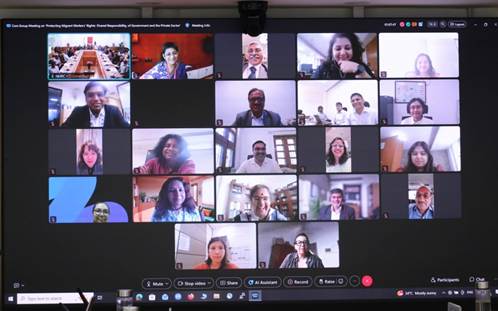
Justice Ramasubramanian emphasised the need to shift from a compliance-based approach to a rights-based culture for migrant workers. He also stressed systemic reforms such as interstate coordination, portable social protection and stronger implementation of labour laws. He said that the immediate focus should be on the migrant workers engaged in construction, hotel, business and domestic work. He suggested that linguistic identity-based association members should be taken on board the coordination councils to improve the ecosystem for migrant labourers.
NHRC, India Member, Justice (Dr.) Bidyut Ranjan Sarangi said that migrant workers are neither given due regard nor wages. He said that non-payment of remuneration on time defeats their purpose of leaving their homes. They need to be provided sufficient wages, housing, health and educational facilities for their children to survive with dignity. He also said that a database on the family members accompanying them should also be created to ensure that they also get all the due benefits.
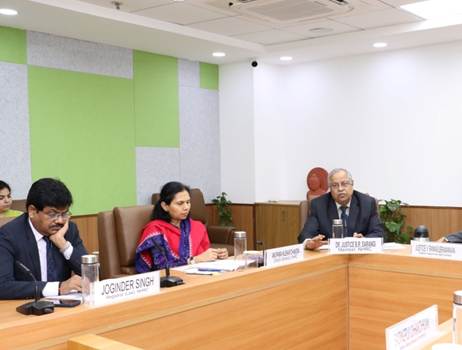
Before this, NHRC, India Secretary General, Shri Bharat Lal, referring to a report on migration, said that migrants worldwide are driving the economy at all levels. He noted that nearly 28.9% of India’s population consists of migrant workers moving between rural and urban areas, playing a vital role in every sector of the economy. Recalling the severe hardships faced during the COVID-19 crisis, he expressed concern over the exploitation of outsourced workers, many of whom reportedly do not receive even minimum wages, with contractors allegedly deducting large sums through payment apps. He stressed the need for greater social sensitivity toward migrants.
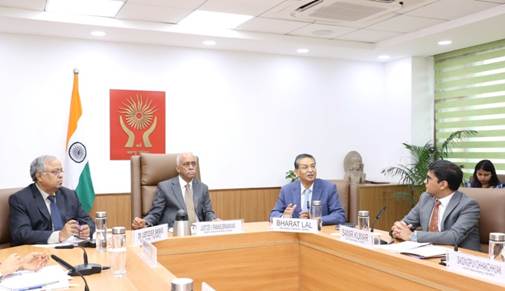
Emphasising the importance of targeted investments and welfare measures for workers, he said that these result in an increase in their efficiency. In this context, he cited a study by the Indian Institute of Management Ahmedabad on migrants. The welfare measures led to an increase in factory workers’ efficiency, which rose by 1.38 times and improved family welfare, education and future prospects for their children. He observed that perceived discrimination and injustice can sometimes lead to violence. Emphasising that ensuring fair wages and social security is a collective responsibility, supported by new labour codes and digital governance systems, he highlighted NHRC, India’s initiatives during COVID-19. While appreciating initiatives like One Nation One Ration Card, he emphasised the need to bridge the gap between laws and implementation. He also called for stronger interstate coordination, portable social protection, worker upskilling and a shift from compliance-based practices to a rights-based approach.
 " alt="" />


 "
"
 "
"
 " alt="" />
 " alt="" />


