

A high-level committee formed by Shri Shivraj Singh Chouhan presents a report on farmers’ complaints A committee formed on instructions of...

A high-level committee formed by Shri Shivraj Singh Chouhan presents a report on farmers’ complaints
A committee formed on instructions of Union Minister Shri Shivraj Singh visits fields, mandis and factories to assess ground situation
Union Minister Shri Shivraj Singh conducts in-depth review of expert committee report during the important meeting in Delhi
“Recommendation to make 22-25% real pulp mandatory in mango-based drinks in interest of farmers and consumers”: Shri Shivraj Singh
“Major plan to improve horticulture through new and top-working varieties in Totapuri orchards”: Shri Shivraj Singh
Union Minister Shri Shivraj Singh stresses zonal purchase, fruit bags and FPO-based processing for farmers
“Centre, states, ICAR and APEDA will together give new direction to Totapuri value chain”: Shri Shivraj Singh Chouhan
Amid continuous complaints of falling incomes of farmers producing Totapuri mangoes in Andhra Pradesh, Tamil Nadu and Karnataka, and falling prices in mandis, Union Minister for Agriculture and Farmers’ Welfare, and Rural Development, Shri Shivraj Singh Chouhan has issued comprehensive directives for wide-ranging improvements in the cultivation, processing and marketing system of Totapuri mangoes after detailed discussions on the recommendations of a high-level committee constituted by him.
Union Agriculture Minister Shri Shivraj Singh Chouhan today held a high-level review meeting at Krishi Bhavan, New Delhi, to assess the problems faced by Totapuri mango-producing farmers of Andhra Pradesh, Tamil Nadu and Karnataka, and took important decisions to strengthen the entire value chain of Totapuri mangoes based on the report of a high-level expert committee. The committee visited fields, mandis and pulp-making units and presented the ground conditions, on the basis of which Union Minister Shri Chouhan made it clear that the file will not simply be closed after preparing a report, but concrete steps will be taken at all three levels – policy, technology and market.
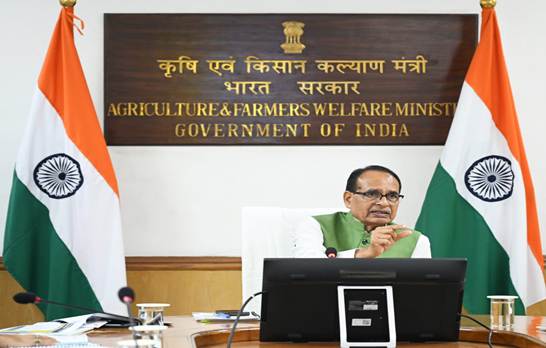
Shri Shivraj Singh Chouhan chaired the high-level meeting to review the problems of Totapuri mango-producing farmers of Andhra Pradesh, Tamil Nadu and Karnataka, which was attended by all senior officials including Indian Council of Agricultural Research (ICAR) Director General Dr. M.L. Jat. The committee chairman, Director of ICAR–CISH (Central Institute for Subtropical Horticulture, Lucknow), Dr. Damodaran T., presented the report. This meeting was focused on the report of the expert committee constituted under the Indian Council of Agricultural Research to examine issues related to decline in cultivation and prices of Totapuri mangoes and to suggest solutions. The committee was constituted under an order dated 2 July 2026, which included scientists from ICAR–CISH (Central Institute for Subtropical Horticulture, Lucknow), ICAR–IIHR (Indian Institute of Horticultural Research, Bengaluru), ICAR–CISH, experts from Dr. YSR Horticultural University, Andhra Pradesh, and officials from the State Horticulture Department.
On the directions of Union Minister Shri Shivraj Singh Chouhan, the committee conducted field visits from July 8 to 10 in the Tirupati and Chittoor districts of Andhra Pradesh, where it met farmers, Farmer Producer Organisations (FPOs), mandi representatives, pulp-making units, exporters and the district administration, and reviewed all stages of the Totapuri mango value chain.
Presenting its report in the meeting, the committee stated that the major reasons behind the decline in Totapuri mango prices this year include lack of timely coordination in processing capacity and procurement arrangements, low quantity of real pulp in mango-based beverages in the domestic market, and fluctuations in the global market. The committee also highlighted that in many places, factories are unable to make timely purchases at the beginning of the season, while farmers’ produce reaches mandis and processing units simultaneously, causing sudden price crashes and leaving farmers at a loss.
On the issue of mango-based beverages, the committee suggested that all such products should be made to contain 22-25 per cent of real natural mango pulp. In the committee’s view, if only those beverages which contain more than the prescribed limit of pulp are kept in the 5 per cent concessional Goods and Services Tax (GST) category, and higher GST rates are applied to low-pulp products, then on the one hand consumption of Totapuri mango pulp will increase, and on the other hand consumers will get more nutritious and genuine fruit-based beverages.
Considering this proposal, Union Minister Shri Chouhan directed the convening of an inter-ministerial meeting among the relevant Ministries – Food Safety and Standards Authority of India (FSSAI), GST Council, Ministry of Finance, Ministry of Food Processing Industries, Ministry of Agriculture and Ministry of Health – so that consensus can be reached on necessary standards and tax structure.
To stabilise and systematise the Totapuri mango value chain, the committee recommended the constitution of a Central Coordination and Price Stabilisation Committee, which will function as an apex institutional mechanism for major producing States such as Andhra Pradesh, Tamil Nadu and Karnataka. Before every mango season, this committee will review crop estimates, processing and export demand, agricultural costs and market conditions, and will help in determining indicative profitable farm-gate procurement prices for farmers and reference prices for mango pulp, so that clear signals are available in advance to both farmers and the industry.
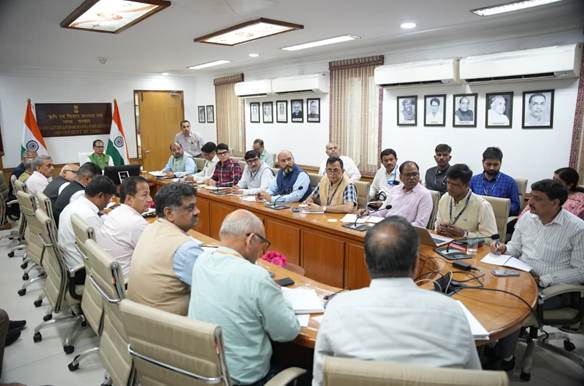
It was also informed in the meeting that a large area of Totapuri mango cultivation in the Chittoor, Tirupati, Annamayya and Kadapa districts of Andhra Pradesh consists of old orchards whose productivity and quality have both declined. To deal with this situation, the committee recommended rejuvenation of orchards through the top-working technique, under which scions of high-value varieties such as Neelam, Alphonso, Himayat, Banganapalli and others can be grafted onto existing trees, and a new, more valuable crop can be obtained in two to three years. Along with this, emphasis was also laid on implementing Good Agricultural Practices (GAP) at the cluster level and providing training, demonstration gardens and technical assistance to farmers.


 "
"
 "
"
 " alt="" />
 " alt="" />
.jpeg)


